 Ferndale
 Windows Built for the Sudden Valley Setting
Sudden Valley sits in a part of Whatcom County where the weather doesn't do anything halfway. Homes here get long stretches of driving rain, heavy tree cover that keeps siding and window trim damp for days at a time, and a moss season that can run most of the year in shaded spots. Add in the marine air that moves through this whole corner of Washington and you've got a climate that is genuinely hard on window installations that aren't done right the first time.
Window installation isn't just picking a product out of a catalog. It's flashing, sealing, and fitting a window into a wall assembly so that water has nowhere to go but back outside. In a dry climate, a mediocre installation might last for years before anyone notices a problem. Around Sudden Valley, a mediocre installation shows itself fast — soft trim, fogged glass, drafts, or rot working its way into the framing behind the window. We install windows in this area regularly, and almost every callback we get for "bad windows" turns out to be a bad install, not a bad product.
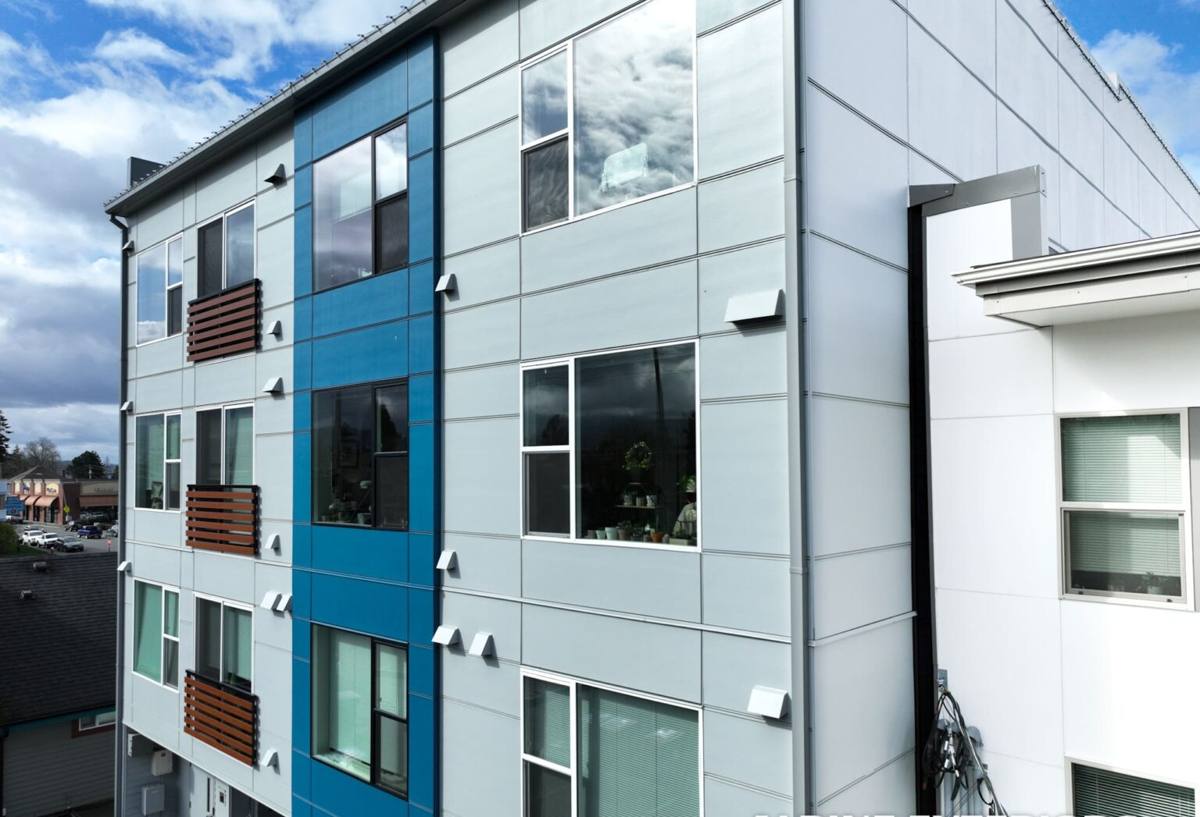
What Whatcom County Weather Actually Does to a Window Opening
Driving Rain
Rain that comes in sideways doesn't just hit the glass — it hits the trim, the sill, and every seam around the frame. A window opening that isn't properly flashed and sealed will eventually let that water track behind the siding, where it can sit against sheathing and framing for weeks without anyone seeing it.
Shade and Moisture Retention
Sudden Valley's wooded lots are part of what makes it a nice place to live, but tree cover also means less direct sun on siding and trim, which means slower drying after every rain event. Wood trim and lower-grade caulking break down faster under those conditions, and gaps that would dry out quickly on an open, sunny lot can stay damp for days here.
Moss and Organic Growth
Moss doesn't just grow on roofs. It takes hold on window sills, in trim joints, and anywhere moisture sits against a surface long enough. Once moss gets a foothold on a wood sill or trim board, it holds even more moisture against that wood, which speeds up rot. A tight, well-sealed installation with the right materials gives moss far less to grab onto.
Temperature and Humidity Swings
Coastal Whatcom County doesn't see extreme cold, but the daily swing between cool, damp mornings and warmer afternoons puts real stress on seals and glass units over time. Older double-pane windows in particular tend to fail — fogging between the panes — faster in this kind of humid, variable climate than they would somewhere drier.
Signs a Sudden Valley Home May Need New Windows
Most homeowners don't think about their windows until something is obviously wrong. By the time you notice these signs, the problem has usually been building for a while.
- Fog, haze, or moisture trapped between the panes of an insulated glass unit
- Soft, spongy, or visibly rotted wood on the sill, jamb, or exterior trim
- Drafts you can feel near the window frame on a windy day
- Windows that are difficult to open, close, or lock — often a sign the frame has shifted or swollen
- Visible gaps between the trim and siding, or caulking that has cracked and pulled away
- A noticeable jump in heating costs without any other explanation
- Moss or dark staining building up on sills or lower trim boards
- Condensation forming on the inside of the glass regularly during cooler months
Any one of these on its own might not mean much. Two or three together, especially on the same window, usually means it's time for a real look — not just a caulk touch-up.
What a Correct Window Installation Actually Involves
A window installation is only as good as what happens before the new window is even set in the opening. The steps that matter most are the ones nobody sees once the trim goes back on.
Removing the Old Window the Right Way
This means checking the framing and sheathing around the opening for hidden water damage before anything new goes in. In a climate like this, it's common to find some degree of moisture damage around older windows that were sealed poorly the first time. Installing a new window over a compromised opening just hides the problem — it doesn't fix it.
Flashing and Weather Barrier Integration
The window needs to be integrated into the house's weather-resistive barrier in the correct order — flashing tape and building paper layered so that any water that does get behind the siding is directed out and down, never trapped behind the window frame. This is the single most important step for long-term performance in a wet climate, and it's the step that gets rushed most often on low-bid jobs.
Sealing and Insulating
The gap between the window frame and the rough opening needs to be insulated and sealed without over-packing it, which can bow the frame and cause the window to operate poorly. Exterior sealant needs to be applied at the right joints — not everywhere, and not nowhere.
Fit and Operation
A window that's slightly out of square will bind, won't seal fully, and will wear out its hardware faster. Every window we set gets shimmed, leveled, and checked for smooth operation before we move on.
Choosing a Window Frame Material for This Climate
There isn't one "best" window for every home, but some materials handle constant moisture and humidity better than others. Here's how the common options generally compare for a home in a wet, wooded setting like Sudden Valley.
| Frame Material | Moisture Behavior | Maintenance | Notes for This Climate |
|---|---|---|---|
| Vinyl | Does not absorb water or rot | Low — occasional cleaning | Common, cost-effective choice; good seal life when installed correctly |
| Fiberglass | Very stable, resists expansion and contraction | Low | Holds up well to humidity and temperature swings; higher upfront cost |
| Wood (unclad) | Absorbs moisture, needs a continuous paint/seal barrier | High — regular repainting and inspection | Attractive but demands consistent upkeep in a damp, shaded environment |
| Aluminum-clad wood | Exterior protected, interior still wood | Moderate | Good look with better weather protection than bare wood, at added cost |
For homes with heavy tree cover and limited direct sun exposure — common throughout Sudden Valley — we generally steer homeowners toward vinyl or fiberglass for the exterior-facing performance, and save wood or wood-look finishes for interior trim where moisture isn't a factor. That's not a knock on wood windows; it's just an honest read on how much upkeep a homeowner is willing to commit to.
Our Installation Process
The process is straightforward, but we don't skip steps to save time.
- On-site assessment — we look at each window opening individually, not just the house as a whole, since sun exposure and moisture history can vary window to window on the same home.
- Measurement and product selection — accurate measurements matter more than people expect; a window that's slightly undersized or oversized for its opening creates sealing problems from day one.
- Removal and opening inspection — old windows come out carefully so we can check the framing underneath before anything new goes in.
- Flashing, sealing, and setting the new window — done in the correct sequence so the wall's drainage plane stays intact.
- Trim and finish work — interior and exterior trim reinstalled or replaced, with attention to any wood components that will be exposed to weather.
- Final check — every window operates, locks, and seals before we consider the job done.
Why a Crew That Already Works Sudden Valley Matters
Window installation quality depends a lot on whether the crew understands the specific conditions a home is dealing with. A crew that mostly works drier inland areas may not think twice about sealing details that matter a great deal on a shaded, damp lot near Sudden Valley. We work throughout Ferndale and the surrounding Whatcom County communities, and the pattern we see repeatedly on wooded, lake-adjacent properties is the same: moisture problems show up first at window openings, long before they show up anywhere else on the house.
Local familiarity also matters for practical reasons — knowing what permitting looks like for exterior work in this part of the county, understanding typical lot layouts and access for equipment, and having a realistic sense of how weather windows work for scheduling exterior work here. None of that is glamorous, but it's the difference between a job that goes smoothly and one that runs into avoidable delays.
After Installation: Keeping New Windows Performing
A correctly installed window in this climate still benefits from basic upkeep:
- Rinse sills and trim periodically to keep organic debris and moss spores from taking hold
- Check exterior caulking once a year, especially after a hard winter
- Keep gutters and downspouts clear so water isn't sheeting down across window openings
- Trim back vegetation that keeps trim and sills shaded and damp longer than necessary
- Address any soft or discolored trim promptly rather than waiting for it to spread
None of this is heavy maintenance — it's the kind of five-minutes-a-season attention that keeps a good installation performing the way it should for its full lifespan.
Get a Straightforward Estimate
If you're dealing with drafty, foggy, or sticking windows at your Sudden Valley home, or you just want an honest read on whether repair or replacement makes more sense, we're happy to take a look. There's no pressure and no sales script — just a straight assessment based on what we see at your home. Use the form below to request a free estimate.