 Ferndale
 What Roofs Near Lummi Nation Are Up Against
Homes around Lummi Nation and Ferndale sit close to open water — Bellingham Bay, Lummi Bay, and the wider Strait of Georgia are all nearby — and that proximity shapes how a roof ages here. Salt-laden air corrodes exposed metal faster than it does further inland: nail heads, flashing, gutter hangers, and vent boots all take the hit first. Add in wind-driven rain that comes off the water sideways instead of straight down, and you get water finding its way into laps and seams that would stay dry in a calmer climate. On top of that, Whatcom County's long, overcast wet season — often stretching from October well into spring — keeps roof surfaces damp for weeks at a time, especially on shaded, north-facing slopes under conifer cover. That combination is exactly what moss and lichen need to take hold.
None of this means a roof here is doomed to fail early. It means repairs have to account for all three factors at once — corrosion, wind-driven moisture, and moss — rather than just patching the one problem that happens to be visible from the driveway.
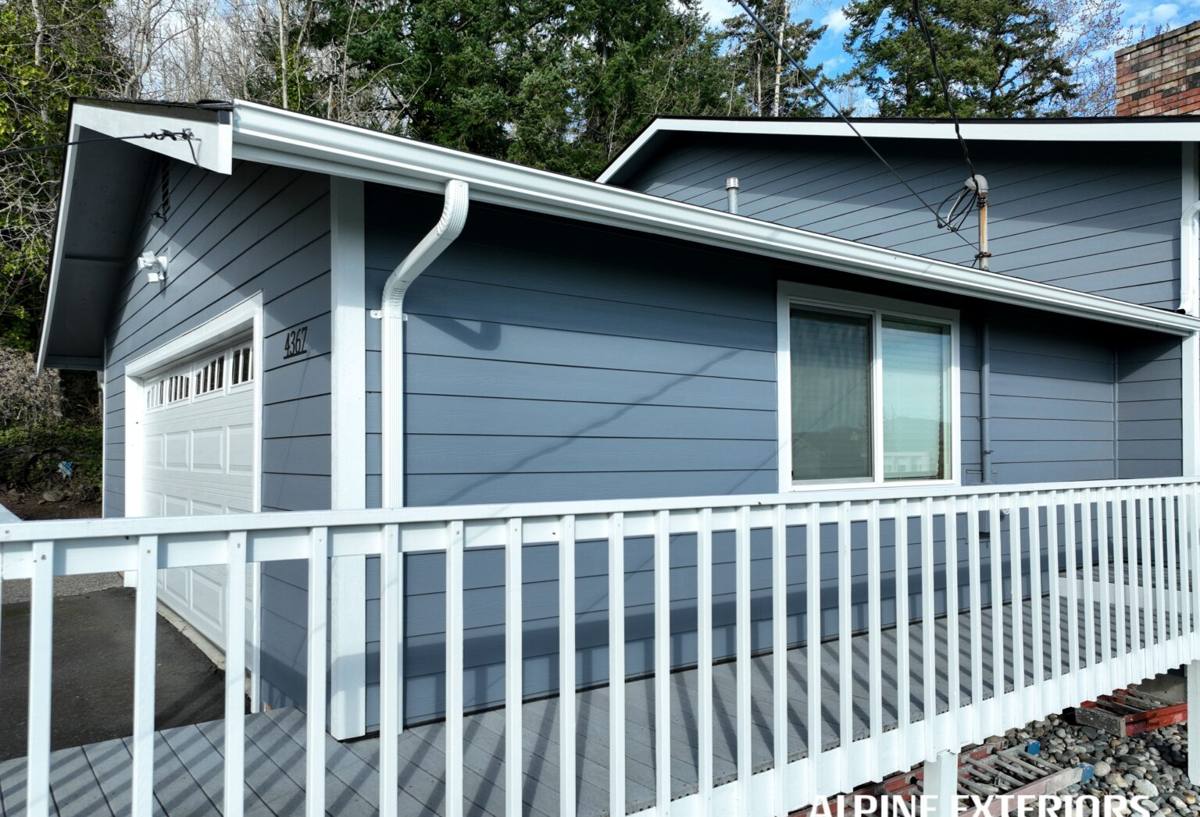
Signs Your Roof Needs Repair, Not Just a Look
Most roof failures we get called out for didn't happen overnight. They started small and got ignored because nothing was leaking yet. Here's what we tell homeowners to watch for:
- Dark streaking or thick moss patches, especially on shaded slopes or under overhanging branches
- Granules collecting in gutters or at the base of downspouts
- Curling, cupping, or cracked shingles, particularly on south- and west-facing slopes
- Rust staining below metal flashing, vent caps, or fasteners
- Soft or discolored ceiling drywall, especially near chimneys, skylights, or where two roof planes meet
- Daylight visible through the roof deck from inside an attic or crawl space
- Gutters pulling away from the fascia, which often points to rot underneath
Any one of these on its own might be minor. Two or three together usually means water has already found a path in and the roof needs an actual assessment, not just a caulk gun.
What a Correct Roof Repair Actually Involves
Tracing the Water, Not Just the Stain
A ceiling stain rarely sits directly below the leak. Water runs along rafters, decking, and underlayment before it shows up indoors, sometimes several feet from where it actually entered. A repair that just seals the spot over the stain often leaves the real entry point untouched, and the same leak reappears in the next hard rain. Proper repair starts by getting on the roof, or in the attic, and following the path back to the source — usually a failed flashing detail, a cracked pipe boot, or shingles that have lost their seal.
Flashing Is Where Most Leaks Actually Start
Chimneys, skylights, valleys, and the point where a roof meets a sidewall are the most common failure points on homes in this area, because they're the places where the roof surface changes direction and depends on metal flashing rather than shingles alone to shed water. Wind-driven rain off the bay makes these details work harder than they would in a calmer climate, so any repair touching a flashing point needs to reset the whole detail — new step flashing, new counterflashing, proper laps — not just a bead of sealant over the old metal.
Matching In, Not Just Patching Over
Shingles fade and granules wear unevenly, so a patch using new material dropped into an old field often stands out and, worse, can shed water incorrectly if the courses aren't woven in correctly. A repair done right ties new shingles into the existing courses with the same lap pattern the rest of the roof uses, and pulls the surrounding fasteners and underlayment into good condition at the same time.
Common Problems We Find on Homes in the Ferndale and Lummi Nation Area
| What We Find | Likely Cause | What the Repair Involves |
|---|---|---|
| Thick moss on shaded slopes | Long wet season, tree cover, poor airflow across the roof surface | Careful moss removal, treatment, and checking the decking underneath for softness |
| Rusting nail heads or flashing | Salt air accelerating corrosion of exposed metal | Replacing corroded fasteners and flashing with materials rated for coastal exposure |
| Leaks around chimneys or skylights | Wind-driven rain forcing water past worn flashing | Full flashing detail rebuild, not a sealant patch |
| Soft decking at eaves | Slow, long-term moisture intrusion from clogged or undersized gutters | Cutting back to sound decking, replacing rot, restoring proper drainage |
| Granule loss and shingle curling | Age combined with repeated wet-dry cycling | Assessing remaining roof life to decide between targeted repair and replacement |
Repair or Replace? How We Help You Decide
Not every roof problem needs a full replacement, and not every roof is worth another round of patches. We walk homeowners through the same factors every time:
| Factor | Leans Toward Repair | Leans Toward Replacement |
|---|---|---|
| Roof age | Under roughly 15 years, or a newer roof with an isolated problem | Near or past the material's expected service life |
| Extent of damage | Localized to one slope, valley, or penetration | Spread across multiple slopes or recurring in different spots |
| Decking condition | Solid when probed, no soft spots | Soft, delaminating, or rotted in more than a small area |
| Moss and algae history | First occurrence, treatable | Chronic, heavy staining that keeps returning despite cleaning |
| Rough cost range | Often a few hundred to a few thousand dollars depending on scope | A larger investment, but resets the clock on the whole roof |
We'd rather tell a homeowner honestly that a $600 repair will hold for years than sell a full tear-off that isn't needed yet — and we'll say just as plainly when a roof has reached the point where more patching is just delaying the inevitable and spending money that won't count toward a new roof.
Our Roof Repair Process
- Inspection. We get on the roof (and into the attic when needed) and physically check flashing, fasteners, decking, and shingle condition rather than guessing from the ground.
- Diagnosis. We trace the actual water path so the repair addresses the real entry point, not just the visible symptom.
- Written scope and price. You get a clear explanation of what's failing, what we'll do about it, and a straightforward cost before any work starts.
- The repair itself. Damaged decking, flashing, or shingles are replaced with materials matched to what's already on the roof wherever possible.
- Cleanup and check. Debris, old materials, and stray fasteners are cleared from the yard and gutters before we call it done.
- Follow-up. We stand behind the work and want to hear from you if anything doesn't perform the way it should.
Materials and Methods We Use in This Climate
Given the salt air and moss pressure specific to this part of Whatcom County, we hold to a few standards on every repair:
Corrosion-resistant fasteners and flashing. Cheaper galvanized fasteners can start showing surface rust within a few seasons this close to salt water. We use fasteners and flashing rated for coastal exposure so the repair doesn't need to be redone because the hardware failed before the shingles did.
Zinc or copper strips for moss control. On roofs with a history of heavy moss, we'll often recommend a zinc or copper strip near the ridge. Rain washing over the metal releases trace amounts that discourage moss regrowth on the slopes below — it's a maintenance aid, not a one-time cure, and it works best paired with keeping tree limbs trimmed back so the roof gets some sun and airflow.
Synthetic underlayment where it makes sense. Synthetic underlayment sheds wind-driven rain better than older felt products and holds up longer to the repeated wet-dry cycling typical of this climate, which matters most on valleys and low-slope sections where water sits longest.
No shortcuts on flashing details. We don't rely on sealant alone to fix a flashing failure. Sealant degrades faster than metal, and using it as the primary defense against wind-driven rain just guarantees a callback in a year or two. Metal-to-metal laps and proper flashing geometry are the actual fix; sealant is a supplement, not a substitute.
Why Hire a Crew That Already Works in Lummi Nation and Ferndale
A roofer who mostly works drier, inland climates can still do competent work, but they haven't necessarily seen how fast salt air eats galvanized hardware, or how a shaded, tree-lined lot near the water holds moisture longer than an open lot a few miles inland. Crews who repair roofs in this specific area regularly know which flashing details tend to fail first on local homes, which slopes need moss treatment more often, and how to sequence a repair around this region's wet stretches so the work actually cures and seals properly instead of getting rained on mid-job. That local pattern recognition is the difference between a repair that's guessing and one that's targeted.
It also matters for accountability. A crew that works this area regularly is still going to be around, and easy to reach, if a repair needs a follow-up visit — not a name from an app that did one job and moved on.
Keeping a Repaired Roof Healthy Afterward
A good repair buys you years, but a little upkeep protects that investment:
- Clear gutters and downspouts at least twice a year — more often if you're under conifers
- Have moss treated before it forms thick mats, not after
- Trim back branches that keep a slope shaded and damp
- After any major windstorm off the water, do a quick visual check for lifted or missing shingles
- Get a roof looked at every couple of years even without an active leak, since small issues are far cheaper to fix than the water damage they eventually cause
If you're seeing moss buildup, a stain on the ceiling, or just want an honest read on how much life your roof has left, we're happy to take a look. Estimates are free, there's no pressure to book anything, and you'll get a straight answer about what actually needs doing.