 Ferndale
 Sandy Point's Waterfront Location Is Rough on Roofs
Sandy Point sits right on the water in Whatcom County, and that location comes with a roofing environment most inland Ferndale streets don't deal with. Salt-laden air moves off the Strait day and night, wind-driven rain hits roof planes at angles a standard install doesn't always account for, and the shaded, damp stretches of the year keep moss and algae growing longer than they would a few miles inland. None of that makes a roof impossible to keep in good shape — it just means the materials, fasteners, and details matter more here than they would on a dry, sheltered lot.
We've worked on homes throughout the Ferndale area long enough to know that a roof spec that's fine in town can fail early on the water. Salt accelerates corrosion on the wrong hardware. Driving rain finds gaps that would never leak in a calmer setting. And moss doesn't just look bad — left alone, it holds moisture against the roof surface and works its way under laps and seams. Metal roofing, installed correctly for this specific setting, handles all three of those pressures better than most other roofing materials available today.
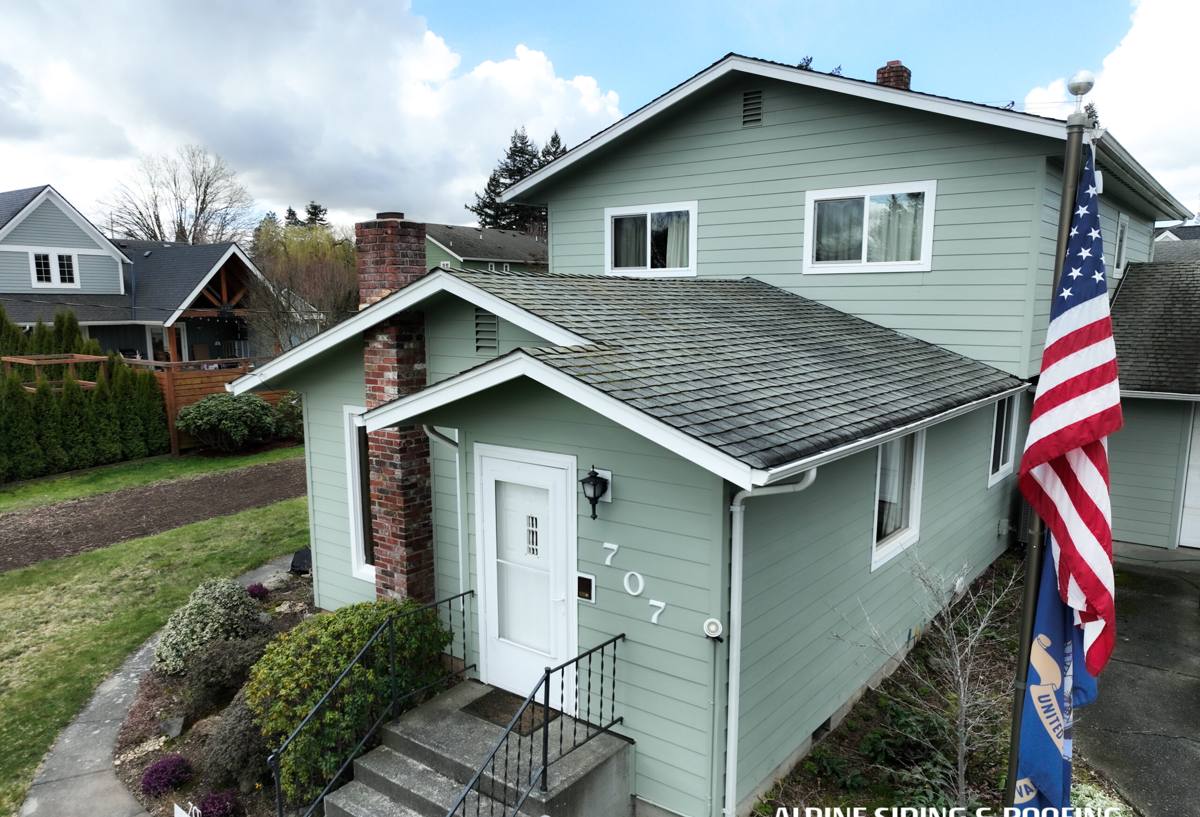
Why Metal Roofing Makes Sense for Sandy Point Homes
Metal isn't the right roof for every situation, but for a waterfront property in a salt-air, high-rain environment, it has real advantages worth understanding before you commit to it.
Shedding Water Instead of Absorbing It
Asphalt shingles are granule-surfaced and porous by design — they're built to shed water off a sloped roof, but the material itself absorbs some moisture over time, especially in a climate that rarely gives a roof a long dry stretch. Metal panels are solid, non-porous, and shed water immediately. On a property that gets consistent wind-driven rain off the water, that matters.
Standing Up to Wind
Waterfront lots catch more direct wind than sheltered inland sites. A metal roof system, properly fastened and detailed at the edges, resists wind uplift better than most shingle products, particularly at eaves and rakes where wind pressure concentrates.
Resisting Moss Growth
Moss needs a rough surface and consistent moisture to get established. A smooth metal panel gives it far less to grip than a shingle roof's textured, granulated surface, and metal sheds water fast enough that the surface doesn't stay damp as long. It won't stop moss from ever appearing near valleys or shaded areas, but it slows it down considerably compared to shingles.
Long Service Life With the Right Coating
A quality metal roof system with a proper coating can last several decades, which matters on a coastal property where re-roofing is more disruptive and more expensive than it is inland — access, staging, and weather windows are all tighter near the water.
What a Correct Metal Roof Installation Involves Here
The material itself is only part of the equation. On a salt-air site, the installation details are where a roof either holds up for decades or starts showing problems in a few years.
Corrosion-Resistant Fasteners and Flashing
Standard steel fasteners and flashing corrode faster in salt air. On a Sandy Point roof, we spec fasteners and flashing rated for coastal exposure, and we make sure dissimilar metals aren't placed in contact with each other — mixing metal types at fastener points is a common shortcut that leads to galvanic corrosion, and it's one of the first things we check when we look at an older coastal roof that's failing early.
Underlayment That Backs Up the Panels
Metal panels are the visible layer, but the underlayment underneath is what protects the deck if wind-driven rain ever gets past a seam or fastener. In a high-rain coastal setting, we don't treat underlayment as an afterthought — it's a synthetic, high-performance layer designed to handle sustained wet weather, not a bare-minimum product chosen just to meet code.
Flashing at Every Transition
Valleys, chimneys, vents, and wall transitions are where the vast majority of roof leaks start, on any roof material. On a metal roof, flashing has to be formed and sealed to move with the panel system rather than fight against it. We pay particular attention to valleys and any point where the roof meets a wall, since those are the spots wind-driven rain pushes hardest against on an exposed site.
Ventilation That Matches the Climate
A roof deck that can't breathe traps moisture, and trapped moisture under a metal roof causes condensation issues that have nothing to do with the panels themselves. Balanced intake and exhaust ventilation keeps the attic or roof assembly dry from the inside, which matters just as much as keeping rain out from the outside in a climate this consistently damp.
Comparing Metal Panel Systems for a Coastal Property
Not all metal roofing is the same, and the right choice for a waterfront home isn't always the same as the right choice for an inland property.
| Panel Type | How It's Fastened | Best Fit for Sandy Point |
|---|---|---|
| Standing seam | Concealed fasteners, interlocking seams | Strong choice — no exposed fastener heads for salt air to attack over time |
| Exposed-fastener panels | Screws driven through the panel face | Workable, but fastener heads and washers need to be coastal-rated and checked periodically |
| Stone-coated steel | Interlocking with a granular coating | Good wind and impact resistance; coating adds a textured surface, so keep valleys clear of debris |
Coating matters as much as panel style. Look for coatings and finishes specifically rated for coastal or marine environments — that rating reflects real salt-spray testing, not just a general durability claim. It's a detail worth asking about directly rather than assuming any metal roof product is automatically coastal-grade.
Cost Factors for a Sandy Point Metal Roof
Every roof is priced around its own specifics, but a few factors consistently move the number on a coastal project more than they would inland.
| Factor | Why It Affects Cost Here |
|---|---|
| Panel and coating grade | Coastal-rated coatings and corrosion-resistant hardware cost more than standard-grade materials |
| Roof complexity | More valleys, dormers, and transitions mean more flashing work, which is labor-intensive on metal |
| Access and staging | Waterfront lots can be tighter or have more limited equipment access than inland properties |
| Tear-off condition | Deck repairs found during tear-off, common on older coastal roofs with hidden moisture damage |
| Ventilation upgrades | Older homes often need intake or exhaust vents added or corrected to suit the new roof system |
We'll walk through which of these actually apply to your roof during an on-site look — broad ranges without seeing the roof aren't useful to you, and we'd rather give you real numbers once we know what we're working with.
How We Handle a Metal Roofing Project in Sandy Point
1. On-Site Assessment
We walk the roof and the attic or roof deck from the inside, checking for existing moisture damage, ventilation issues, and any deck repairs that will need to happen before new panels go on. This is also when we talk through panel style, coating, and color with you.
2. Tear-Off and Deck Prep
Old roofing comes off, the deck gets inspected and repaired where needed, and any soft or water-damaged sections are addressed before anything new goes down. Skipping this step is how a new roof ends up sitting on a compromised deck.
3. Underlayment and Panel Installation
High-performance underlayment goes down first, followed by the metal panel system, with corrosion-resistant fasteners and properly formed flashing at every valley, penetration, and transition.
4. Ventilation Check and Correction
We confirm intake and exhaust ventilation is balanced for the home, correcting it where the existing setup falls short — a step that's easy to skip but matters for how the roof performs over the next twenty or thirty years.
5. Final Walkthrough
We go over the finished roof with you, point out anything you should keep an eye on given your property's specific exposure, and make sure you know what routine maintenance looks like going forward.
Maintaining a Metal Roof in a Salt-Air, Moss-Prone Environment
Metal roofing needs less maintenance than shingles, but "less" isn't "none," especially this close to the water. A short seasonal check catches most issues before they become expensive ones.
- Clear debris and organic buildup out of valleys and around penetrations, especially after fall storms
- Look for early moss or algae growth in shaded areas and address it before it spreads
- Check exposed fasteners (if your system uses them) for any sign of corrosion or backing out
- Inspect flashing at chimneys, vents, and wall transitions for gaps or sealant that's pulled away
- Confirm gutters and downspouts are clear so water isn't backing up against roof edges
- After major windstorms, do a visual check for loose panels or lifted flashing
None of this requires climbing on the roof yourself — a lot of it can be checked from the ground with binoculars or during a routine gutter cleaning. If something looks off, it's worth having it looked at before the next round of driving rain.
Why Local, Sandy Point-Specific Experience Matters
A roofing crew that mostly works dry, inland neighborhoods can install a technically sound roof that still isn't specified right for a waterfront lot — wrong fastener grade, standard underlayment, ventilation sized for a different climate zone. None of those show up as problems on day one. They show up two, five, or ten years in, usually as corrosion, a slow leak at a valley, or moisture damage that started from the inside.
Working roofs throughout Ferndale and the surrounding Whatcom County coastline means we spec materials for what Sandy Point actually throws at a roof, not a generic regional average. That's the difference between a roof that looks right at installation and one that's still performing the way it should well into its second decade.
If you're weighing a metal roof for your Sandy Point property, we're glad to come take a look, answer your questions honestly, and put together a free, no-pressure estimate based on your actual roof — just fill out the form below to get started.