 Ferndale
 Building New in Everson: What Your Windows Are Up Against
Everson sits inland from the salt water that shapes so much of Whatcom County's weather, but the same marine-influenced storm systems that soak Ferndale and Bellingham Bay push straight up the Nooksack valley too. If you're framing a new home here, you're building for a long, wet fall-through-spring stretch of driving rain, damp fog that lingers in the low ground near the river, and a moss season that gets a foothold on anything that stays shaded and wet for weeks at a time. Homes closer to the water deal with salt-laden air eating at hardware and finishes; homes in Everson deal more with sustained moisture load and standing dampness. Either way, the lesson for new construction is the same: the window itself only does half the job. The other half is how it's flashed, sealed, and integrated into the wall before siding ever goes up.
New-construction window work is a different trade than swapping out an old window in an existing wall. It happens earlier in the build sequence, it involves more people (framer, window supplier, siding crew, sometimes the GC's own trim crew), and mistakes made here get buried behind siding and trim for the next 30-40 years. We do this work as part of full siding installs in Everson and around Ferndale specifically because we don't want to inherit someone else's flashing mistakes when we show up to close in the walls.
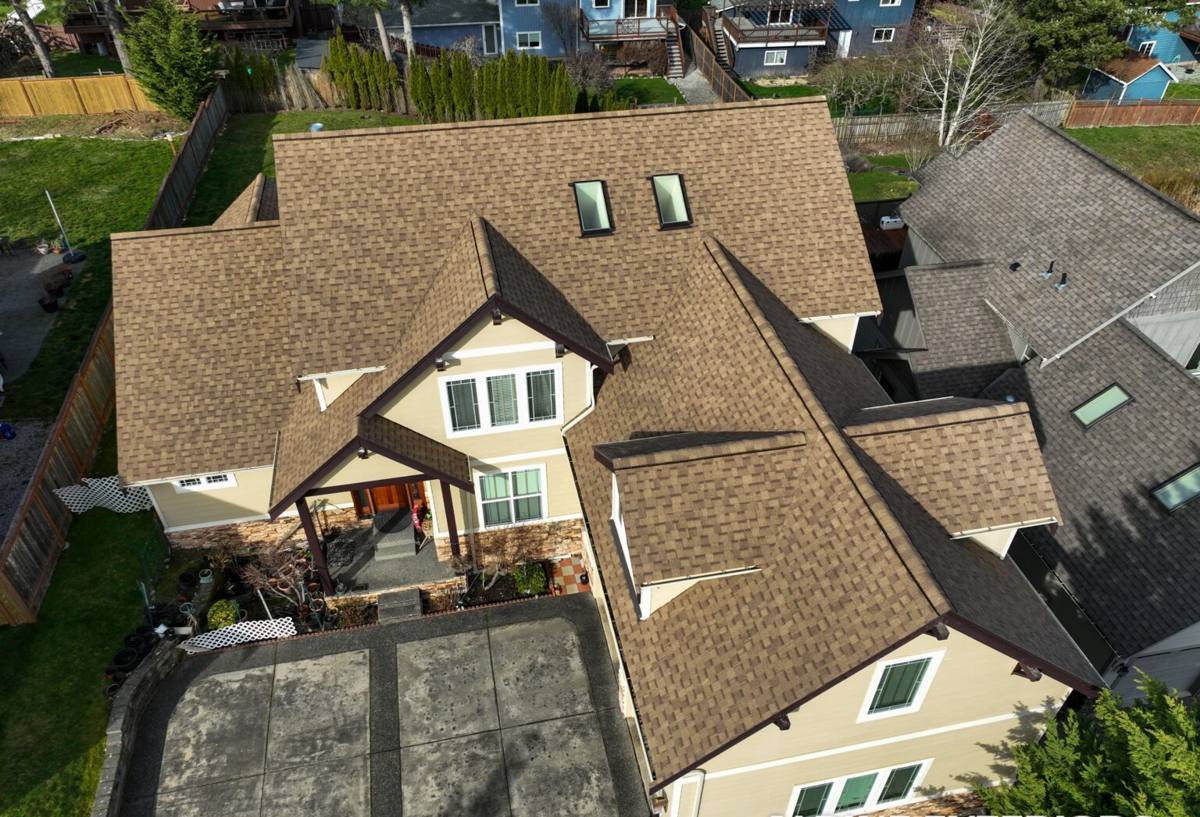
New-Construction Windows vs. Replacement Windows: Why the Job Is Different
A replacement window goes into an opening that's already been sided, trimmed, and weatherproofed for years. The old unit comes out, the new one goes in, and the existing flashing and siding get patched around it. New construction is the opposite — you're building the water management system from scratch, in the right order, with nothing to hide behind if it's done wrong.
- Rough openings are built to spec rather than worked around — proper shim space, square, plumb, and level before the window ever arrives.
- Flashing is layered in sequence with the house wrap and sill pan, not patched in after the fact.
- Fastening is typically through a nail fin into sheathing, rather than through-frame into an existing opening.
- Siding and trim are planned around the window, not cut and coped to fit an existing profile.
That order-of-operations difference is exactly where new-construction window jobs go wrong when they're handled by whoever happens to be on site that week, rather than a crew thinking about how the window, the weather barrier, and the siding all need to work together.
The Flashing and Moisture Sequence That Actually Keeps Water Out
Windows themselves rarely fail. Water intrusion around new-construction windows almost always traces back to the sequencing of flashing tape, sill pans, and house wrap — the parts nobody sees once the siding is on. In a climate that delivers sustained, driving rain rather than short bursts, a flashing detail that's "close enough" will eventually find the gap.
The sequence we follow
- Sill pan first. A sloped or flashed sill pan under the rough opening gives any water that gets past the window a path back out, instead of down into the framing.
- House wrap integration, shingle-style. The weather-resistive barrier laps over the sill flashing and under the head flashing, so water always drains down and out over the layer below it — never into a seam.
- Jamb and head flashing taped in order, sealing the nail fin to the wall plane before any siding touches the opening.
- Backer rod and sealant at the interior, not just the exterior, to control air and moisture from both sides.
- Siding sequenced around the finished, flashed opening — not cut in a way that creates a new water path at the corners.
Skipping or reordering any one of these steps doesn't usually cause a problem on day one. It shows up two or three winters later as staining, soft trim, or a musty smell near a window — right when it's expensive to trace back and fix. Getting the sequence right the first time is the entire value of hiring this out to people who do it as their trade, not as a side task on a framing crew's punch list.
Choosing the Right Window for a Whatcom County New Build
Frame material matters more here than in a drier climate, because the window sits under sustained moisture load for months at a time, not just occasional storms. There's no single "best" choice — it's a trade-off between upfront cost, maintenance, and how the frame handles years of damp exposure.
| Frame Material | How It Handles Local Moisture | Maintenance | Typical Fit |
|---|---|---|---|
| Vinyl | Won't rot; performs well in wet climates | Low — occasional cleaning | Most cost-conscious new builds |
| Fiberglass | Very stable dimensionally, excellent moisture resistance | Low | Homes wanting a step up in durability and paintability |
| Wood (clad exterior) | Interior wood warmth, but exterior cladding is what protects it from our rain | Higher — depends on cladding condition long-term | Homes prioritizing interior appearance |
| Aluminum | Conducts cold and can condense; less common in new residential builds here | Moderate | Specific architectural or commercial applications |
We'll talk through what your builder or plans call for and give you an honest read on how each option holds up given where on the property the window sits — a north-facing wall in shade holds moisture and moss differently than a sun-exposed south wall.
Glass and Hardware Considerations
Beyond frame material, a few details matter more in this climate than a sales sheet usually mentions:
- Low-E, double-pane glass is standard for a reason here — it cuts condensation risk on cold, damp mornings, which is common in the valley.
- Corrosion-resistant hardware (hinges, locks, cranks) holds up better through years of humid conditions, even inland.
- Weep hole placement should stay clear of finish grade or landscaping mulch that can block drainage during heavy rain.
Our New-Construction Window Install Process
When we're brought onto a new build in Everson — whether we're supplying and installing the windows ourselves or picking up install after a supplier delivers them — we run a consistent process:
- Rough opening check. We verify square, plumb, level, and correct sizing before a single window is set. Framing tolerances get caught here, not after.
- Sill pan and flashing install, following the sequence above, before the window is set.
- Window setting and shimming to manufacturer spec, checking operation (open, close, lock) before final fastening.
- Fin fastening and flashing tape integrated with the house wrap in the correct shingle-lap order.
- Interior air seal with backer rod and sealant, plus insulation in the shim space — this affects both moisture control and energy performance.
- Exterior trim and siding tie-in, coordinated so the finished look and the water management both land correctly.
- Final walkthrough with photos of the flashing sequence before it's covered by siding, so there's a record of what's behind the wall.
Coordinating With Your Builder or GC
Most new-construction window jobs in Everson involve more than one contractor touching the wall — framer, window supplier, and siding crew, at minimum. The most common source of delay or rework isn't bad work, it's poor handoffs between trades. We coordinate directly with your general contractor or builder on:
- Timing window delivery and install around framing and dry-in schedules
- Confirming rough opening sizes against actual window orders before they're cut
- Making sure house wrap goes on in the right order relative to window install, not before or after in a way that breaks the flashing sequence
- Scheduling siding to follow immediately once windows and flashing are inspected and signed off
Because we also do the siding, we have a direct stake in the flashing being right — we're the ones covering it up and living with the consequences if it isn't.
Common New-Construction Mistakes We See
Most of what causes problems down the road isn't the window brand — it's shortcuts in the details around it:
- House wrap installed in the wrong order relative to the window flashing, creating a seam that channels water inward instead of out
- Missing or improvised sill pans, relying on caulk alone to keep water out of the rough opening
- Rough openings cut oversized "to be safe," leaving too much shim gap and inconsistent support around the frame
- Siding butted tight against the window trim with no room for material movement or drainage
- Flashing tape applied without back-pressure or in cold, damp conditions where it won't adhere properly
None of these show up on install day. They show up in year three or four, as a stain on drywall below a window or a soft spot in exterior trim — which is exactly why the install sequence matters more than almost anything else on the job.
A Practical Checklist Before Your Windows Go In
- Rough openings confirmed against actual window schedule and sizes, not just plan drawings
- House wrap and flashing materials on site and compatible with your window manufacturer's requirements
- Weather forecast checked — flashing tape and sealants need dry, moderate conditions to bond properly
- Clear understanding of who's sequencing windows, wrap, and siding, and in what order
- Photos or documentation plan for flashing details before they're covered by siding
Why Hire a Crew That Already Works in Everson
Everson and the rest of inland Whatcom County have their own weather personality — heavier standing moisture and a longer moss season than you'll find right on the coast, even if the salt air itself is less of a factor here than in Ferndale proper. A crew that works across this whole area day to day knows which details matter more depending on where a house sits — shaded valley lots versus open, sun-exposed ones — and doesn't have to relearn local conditions on your dime. We install new-construction windows as part of full siding jobs throughout Ferndale, Everson, and the surrounding communities, which means the flashing sequence, the material choices, and the finished exterior are all handled by one crew thinking about the whole wall system, not just one component of it.
If you're planning a new build in Everson and want windows installed the right way the first time, we're happy to walk your plans, talk through material options, and give you a straightforward, no-pressure estimate — just fill out the form below.