 Ferndale
 Roof Repair in Semiahmoo: Built for the Whatcom County Coastline
Semiahmoo sits right where the Salish Sea meets the wind, and that location shapes everything about how a roof ages here. Homes on or near the spit take on salt-laden air, near-constant marine moisture, and long stretches of shade and moss growth that inland Whatcom County properties simply don't deal with to the same degree. A roof repair here isn't just patching a leak — it's addressing why that leak happened in the first place, and making sure the fix holds up against conditions that are genuinely harder on roofing materials than most of the region.
We work throughout Ferndale and the surrounding Whatcom County coastline, and Semiahmoo is one of the areas where we see the clearest pattern of premature roof wear tied directly to exposure. This page walks through what that means for your roof, what a proper repair looks like, and how we approach the work.
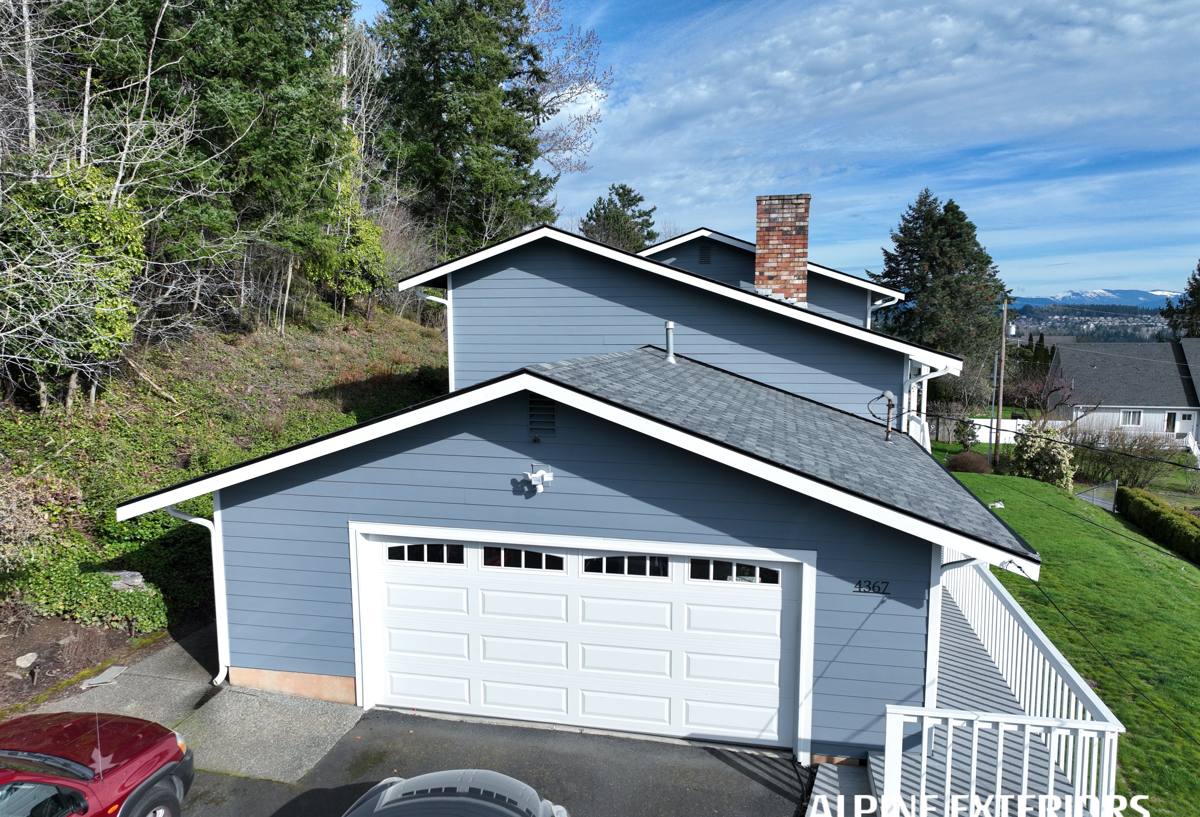
Why Semiahmoo Roofs Take a Different Kind of Beating
Salt Air and Metal Fatigue
Airborne salt from the coast settles on roofing surfaces and accelerates corrosion on anything metal — flashing, fasteners, vents, gutters, and the metal components inside a shingle roof system. Galvanized fasteners that would last decades inland can start showing rust streaks and pitting years earlier out here. When a repair only addresses the visible leak and ignores corroding metal underneath, the same failure tends to come back within a season or two.
Driving Rain and Wind-Driven Water
Whatcom County gets its share of rain generally, but the wind off the water pushes that rain sideways during storms, forcing water up under shingles, around vents, and through gaps that would stay dry in a calmer inland setting. Roofs here need repair details — flashing laps, underlayment overlaps, seal points — that account for wind-driven water, not just water falling straight down.
The Long Moss Season
Shaded, moisture-retaining conditions along the coast mean moss and algae get an earlier start in fall and hang on later into spring than they do further inland. Moss doesn't just look bad — it holds moisture against the roofing material, lifts shingle edges as it grows, and works its way into fastener penetrations. A repair that doesn't address moss growth and drainage patterns is often treating a symptom, not the cause.
Common Roof Repair Needs We See in This Area
Not every roof problem in Semiahmoo looks the same, but a handful of issues come up again and again given the local conditions:
- Flashing failure around chimneys, skylights, and roof-to-wall transitions where salt air has corroded fasteners or lifted seals
- Moss-related shingle lifting and granule loss on north-facing or shaded slopes
- Wind-driven leaks at ridge caps and hip lines after winter storm systems
- Clogged or corroded gutters causing water to back up under the roof edge
- Soft or discolored roof decking discovered once shingles are pulled back for inspection
- Vent boot cracking from UV and salt exposure combined
Some of these are obvious from the ground — a stain on the ceiling, visible moss patches, a shingle corner curling up. Others aren't visible until someone gets on the roof and actually checks the flashing, decking, and fastener condition underneath.
What a Correct Repair Actually Involves
A lot of roof "repairs" amount to sealant smeared over a symptom. That can buy a little time, but it rarely solves the underlying problem in a coastal environment like Semiahmoo. Here's the difference between a surface patch and a repair done right:
| Surface Patch | Proper Repair |
|---|---|
| Caulk or roofing cement applied over the visible gap | Source of the leak traced back to its actual entry point, which is often several feet from the stain |
| Existing corroded fasteners left in place | Corroded or failing fasteners replaced with corrosion-resistant hardware suited for coastal exposure |
| Moss scraped off the surface only | Moss removed, affected shingles assessed for damage, and drainage/airflow issues addressed to slow regrowth |
| New shingle laid over questionable decking | Decking checked for soft spots or rot before new material goes down |
| Flashing re-sealed without re-lapping | Flashing removed, laps corrected, and re-sealed or replaced to shed wind-driven rain properly |
The surface-patch approach isn't necessarily dishonest — sometimes it's what a homeowner asks for as a stopgap before a larger project. But we think it's important that you know the difference going in, so you can decide what actually makes sense for your situation and your budget.
Our Roof Repair Process
When we come out to a Semiahmoo property for a roof repair, the process generally looks like this:
- Inspection first. We get on the roof (not just look from the ground) and check the flashing, fasteners, decking, and shingle condition around the reported problem area — and nearby areas that tend to fail together.
- Honest assessment. We tell you what we find, including whether this is a straightforward repair or a sign that a larger section — or the whole roof — is nearing the end of its useful life. We're not going to talk you into a full replacement if a targeted repair will genuinely hold.
- Repair scope and estimate. You get a clear picture of what's being fixed, what materials we're using, and roughly what it costs before work starts.
- The repair itself. This includes removing and correcting the damaged area — not just covering it — with attention to flashing laps, fastener corrosion resistance, and proper sealing for wind-driven rain.
- Cleanup and check. Debris, old materials, and moss removed from the work area; gutters checked if they're part of the water path that caused the issue.
Materials Suited to Coastal Exposure
Where a repair involves replacing fasteners, flashing, or vent components, we use hardware and materials rated for corrosion resistance rather than the cheapest standard-grade options — because standard-grade galvanized hardware is exactly what tends to fail early this close to the water. It costs a little more up front and saves a return trip in a year or two.
Signs You Need a Roof Repair Now, Not Later
Roof problems in a coastal, moss-prone climate rarely stay small. A minor flashing gap this fall can mean saturated decking by spring. Watch for:
- Water stains on ceilings or upper walls, especially after a windy rainstorm
- Visible moss growth, particularly on shaded or north-facing slopes
- Granules collecting in gutters or at the base of downspouts
- Curling, cracked, or missing shingles, especially near ridges and edges
- Rust streaks near flashing, vents, or metal fasteners
- Daylight visible through the roof deck from inside the attic
- A musty smell in upper rooms or attic spaces
If you're seeing more than one of these, it's worth getting an inspection before the next storm system rolls in off the water.
Repair vs. Replacement: How We Help You Decide
Not every problem roof needs a full replacement, and not every leak is fixable with a simple patch. A few factors that shape that decision:
| Factor | Leans Toward Repair | Leans Toward Replacement |
|---|---|---|
| Roof age | Under roughly 15 years, isolated issue | Near or past typical material lifespan |
| Extent of damage | Localized to one section or feature | Widespread across multiple slopes |
| Decking condition | Solid, no rot detected | Soft spots or rot found in multiple areas |
| History of repairs | First or second issue on this roof | Repeated repairs to the same area |
| Moss/algae staining | Surface-level, recent | Deep, longstanding, granule loss visible |
We'll walk you through where your roof falls on this before recommending a direction — our job is to give you the honest picture, not to steer you toward the bigger job.
Why Hiring a Crew That Already Works Semiahmoo Matters
Roofing crews who mostly work drier, inland areas don't always account for how much harder coastal exposure is on a roof. Wind-driven rain needs different flashing detail than straight-down rain. Moss in a shaded, salt-air environment behaves differently than moss on an inland roof that gets more sun exposure. A repair crew that's used to Whatcom County's coastal conditions knows to check the things that actually fail out here — corroded fasteners, moss-lifted shingle edges, wind-pushed water at flashing laps — instead of just resealing the obvious gap and moving on.
We're based in Ferndale and work this part of Whatcom County regularly, which means we're familiar with how local weather patterns, tree cover, and coastal exposure interact on real roofs in this area — not just in general terms.
What This Typically Involves, Cost-Wise
Roof repair costs vary widely depending on the scope of damage, roof pitch, material type, and accessibility, so we won't quote a number without seeing the roof. In general, small flashing or vent repairs sit at the lower end of the range, while repairs involving decking replacement or larger sections of shingle run higher. We'll always give you a clear, itemized estimate before any work begins, and we'll flag if what looked like a small repair turns into something larger once we're actually up there.
Get a Free, No-Pressure Estimate
If you're dealing with a leak, moss buildup, or storm damage on a Semiahmoo-area roof, we're happy to take a look and give you a straight answer about what it needs. Fill out the form below for a free estimate — no pressure, no upsell, just an honest read on your roof.