 Ferndale
 Siding Installation Built for Lynden's Climate
Lynden sits inland from Ferndale in Whatcom County, but it doesn't escape the weather patterns that define this corner of Washington. Homes here deal with the same driving rain off the Pacific, the same long stretches of damp, low-light winter that keep moss and algae growing on north-facing walls, and enough salt-tinged air moving up from Bellingham Bay and the Strait of Georgia to matter over the life of a siding system. Add in the wind that funnels down from the foothills during winter storms, and you have a climate that is quietly hard on exterior materials, even though it rarely produces a dramatic weather event.
That combination — persistent moisture, seasonal moss pressure, and salt-air exposure — is exactly why siding choice and installation quality matter more here than in a drier inland climate. A siding system that's marginal on moisture resistance or seam detailing won't fail in year one. It fails slowly, in year eight or twelve, after the coating has chalked, the seams have started wicking water, and moss has worked its way into every horizontal lap. By then the fix is a full re-side, not a repair.
What Lynden Homes Actually Need From Their Siding
Before talking about installation technique, it's worth being specific about what a siding system needs to hold up to in this area:
- Sustained moisture resistance — not just rain shedding, but resistance to the slow moisture cycling that happens when siding stays damp for days at a time during the wet season.
- Dimensional stability — materials that swell, shrink, or warp with moisture cycles open up seams and joints over time, which is where water intrusion starts.
- Moss and algae resistance — Whatcom County's shaded, north- and east-facing walls stay damp long enough in fall and winter to support real moss growth, not just surface staining.
- A finish that holds color and doesn't chalk quickly — UV exposure is lower here than in sunnier climates, but humidity-driven finish breakdown is its own problem.
- Corrosion-resistant fasteners and flashing details — with salt air in the mix, even a few miles inland, cheap fasteners and poor flashing choices age faster than they would in a dry inland town.
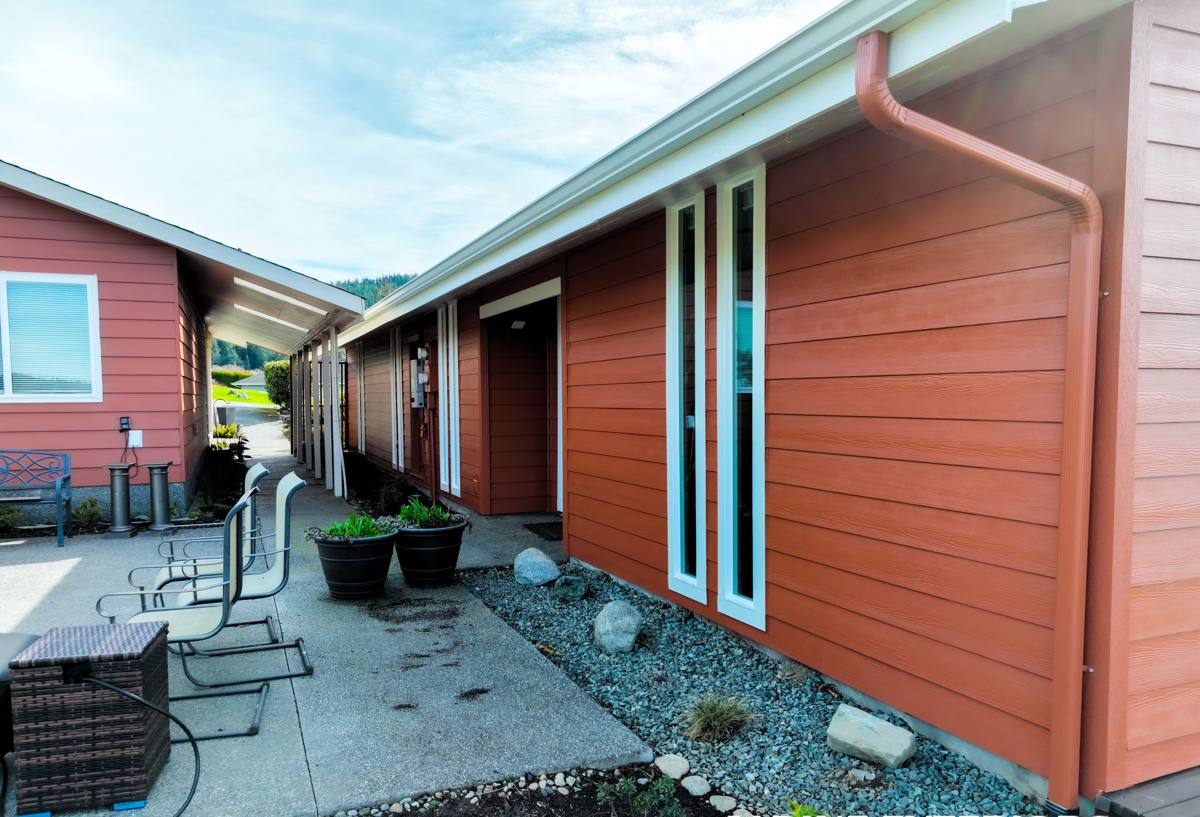
This is the reason we install James Hardie fiber cement exclusively. It's a non-combustible, cement-based product engineered specifically for demanding climates, and Hardie makes a version — the HZ5 product line — built for exactly the wet, coastal-influenced conditions found throughout Western Washington. It doesn't rot, it doesn't support moss growth the way wood-based products can, and it holds its factory-applied ColorPlus finish far longer than field-applied paint on other substrates.
Why We Don't Install Everything Else
We get asked fairly often about vinyl, LP SmartSide, or primed wood siding, usually because a homeowner is comparing quotes. We're upfront about why we don't offer them. Vinyl siding is inexpensive and low-maintenance in the sense that it doesn't need painting, but it's a thin plastic product that becomes brittle in cold weather, expands and contracts significantly with temperature swings, and its seams and J-channels are where water tends to find a way behind the wall over time. In a climate with as much annual rainfall as Whatcom County sees, that's a real long-term liability, not a hypothetical one.
LP SmartSide and other engineered wood products perform reasonably well when installation is precise and maintenance is kept up, but they're wood-based at the core — meaning any breach in the factory coating, at a cut edge, fastener hole, or joint, opens a path for moisture absorption and eventual swelling or delamination. In a low-sun, high-humidity climate like this one, those weak points don't get the drying time they'd get somewhere drier, and the failures tend to show up years earlier than the warranty period suggests they should.
We're not saying these products don't have a place — they're used successfully in plenty of climates and budgets. We simply made a standard, after years of doing exterior work in this region, that for the homes we put our name on, fiber cement is the material that holds up the way homeowners expect siding to hold up: for decades, without turning into a maintenance project.
What a Correct Installation Involves
Hardie siding is only as good as the installation behind it. The product is engineered to perform, but most of the failures we get called to inspect on other contractors' work trace back to installation shortcuts, not the material itself. A correct install on a Lynden home includes:
Weather barrier and drainage plane
A properly lapped, sealed weather-resistant barrier goes on before any siding, with attention paid to how water will drain down and out rather than pooling behind the cladding. Given how much of the year this region spends wet, the drainage plane isn't optional detailing — it's the layer that actually keeps a home dry.
Flashing at every penetration
Windows, doors, hose bibs, light fixtures, vents — every penetration through the siding is a potential entry point for water if it's not flashed correctly. This is where rushed installs cut corners, and it's where problems show up first.
Correct fastening
Hardie specifies fastener type, spacing, and placement for a reason — get it wrong and you risk cracking at the fastener line or reduced wind resistance. We follow Hardie's fastening schedule to the letter, using corrosion-resistant fasteners appropriate for a coastal-influenced climate.
Proper clearances
Siding needs clearance from grade, roof lines, decks, and other transitions to avoid trapping moisture against the bottom edge of the board. This is one of the most commonly overlooked details on lower-quality installs, and it's a leading cause of early rot at the base of a wall.
Caulking and joint treatment
Butt joints, corners, and trim intersections get sealed correctly with products compatible with the Hardie finish system — not generic caulk that will fail and discolor within a couple of years.
Our Process for a Lynden Project
- On-site assessment — we walk the home, check the current siding and sheathing condition, identify moisture damage or rot if any exists, and note problem areas like shaded walls or poor drainage.
- Product and color selection — we go over Hardie's board profiles (lap siding, panel, shingle-style) and ColorPlus color options, and help match the right HZ product line to the home's exposure.
- Written estimate — a clear, itemized quote so there's no ambiguity about scope, materials, or timeline before work starts.
- Tear-off and prep — removal of existing siding, inspection and repair of sheathing, and installation of the weather-resistant barrier and flashing.
- Siding installation — installed to Hardie's fastening and clearance specifications, with careful attention to joints, corners, and trim.
- Final walkthrough — we go over the finished work with the homeowner before considering the job complete.
Cost Factors for a Lynden Siding Project
Every home is different, so we don't publish blanket per-square-foot pricing, but the factors that move a Lynden project's cost up or down are consistent across the region:
| Factor | Why It Matters |
|---|---|
| Home size and wall complexity | More corners, dormers, and roof intersections mean more cutting, flashing, and labor time. |
| Existing siding removal | Tear-off of old wood, vinyl, or damaged siding adds labor and disposal cost versus a bare-wall install. |
| Sheathing repair needs | Moisture damage found underneath old siding needs to be repaired before new siding goes on — this is common on older homes. |
| Board profile and finish choice | Lap siding, shingle-style panels, and trim packages vary in material and labor cost. |
| Access and site conditions | Multi-story sections, tight lot lines, or landscaping obstacles affect staging and labor time. |
Why a Local Crew Matters
Whatcom County's building conditions aren't identical to Seattle's or Portland's — the rain totals, the moss pressure, the salt-air exposure, and the wind patterns coming off the water and down from the foothills all shape how a home should be detailed. A crew that already works in and around Ferndale and Lynden isn't guessing at flashing details or clearance requirements; they've seen how homes in this specific area age, and they build accordingly. That local experience shows up in the small decisions — how a joint gets sealed, how much clearance gets left at grade, which walls get extra attention because they stay shaded and damp longer than the rest of the house.
It also matters for warranty support. Hardie's product warranty and any workmanship warranty we provide are only as useful as the contractor standing behind them. Working with a crew that's established locally, and plans to still be here in ten or twenty years, is part of what makes that warranty mean something in practice.
Signs Your Lynden Home May Need New Siding
- Visible moss or algae buildup that returns quickly after cleaning
- Soft spots, bubbling, or delamination on wood-based or engineered wood siding
- Cracking or warping at seams and corners
- Paint that's failing faster than expected, or chalking heavily
- Visible gaps at trim, windows, or joints
- Rising energy bills that suggest declining wall performance
If you're seeing any of these on a Lynden home, it's worth an inspection before the damage spreads to the sheathing underneath — a problem that's inexpensive to catch early gets expensive fast once it reaches the wall structure.
If you're weighing a siding replacement for a home in Lynden, we're happy to come take a look, walk you through what we're seeing, and put together a straightforward, no-pressure estimate — use the form below to get started.