 Ferndale
 What Cordata's Climate Actually Does to Siding
Cordata sits in the part of Whatcom County where three things gang up on exterior siding at the same time: salt-laden air moving in off the water, driving rain that hits walls sideways instead of falling straight down, and a moss season that can run eight or nine months out of the year in shaded, damp spots. Any one of those is manageable. All three together, decade after decade, is what actually wears out a house's exterior — not one bad storm, but hundreds of ordinary wet weeks.
Salt air accelerates corrosion on fasteners and metal trim, and it speeds up the breakdown of paint films on wood and composite products. Driving rain doesn't just get siding wet — it gets pushed sideways and upward into laps, seams, and butt joints that were only ever designed to shed water falling straight down. And moss doesn't just look bad; where it colonizes a wall, it holds moisture against the surface far longer than open air ever would, which is exactly the condition that rots wood, delaminates composites, and breaks down caulk and paint faster than a sunnier climate would allow.
None of this is unique to any one street in Cordata — it's the reality for homes throughout Ferndale and the rest of Whatcom County. But it matters a great deal when you're deciding what to put back on your walls and how it needs to be installed.
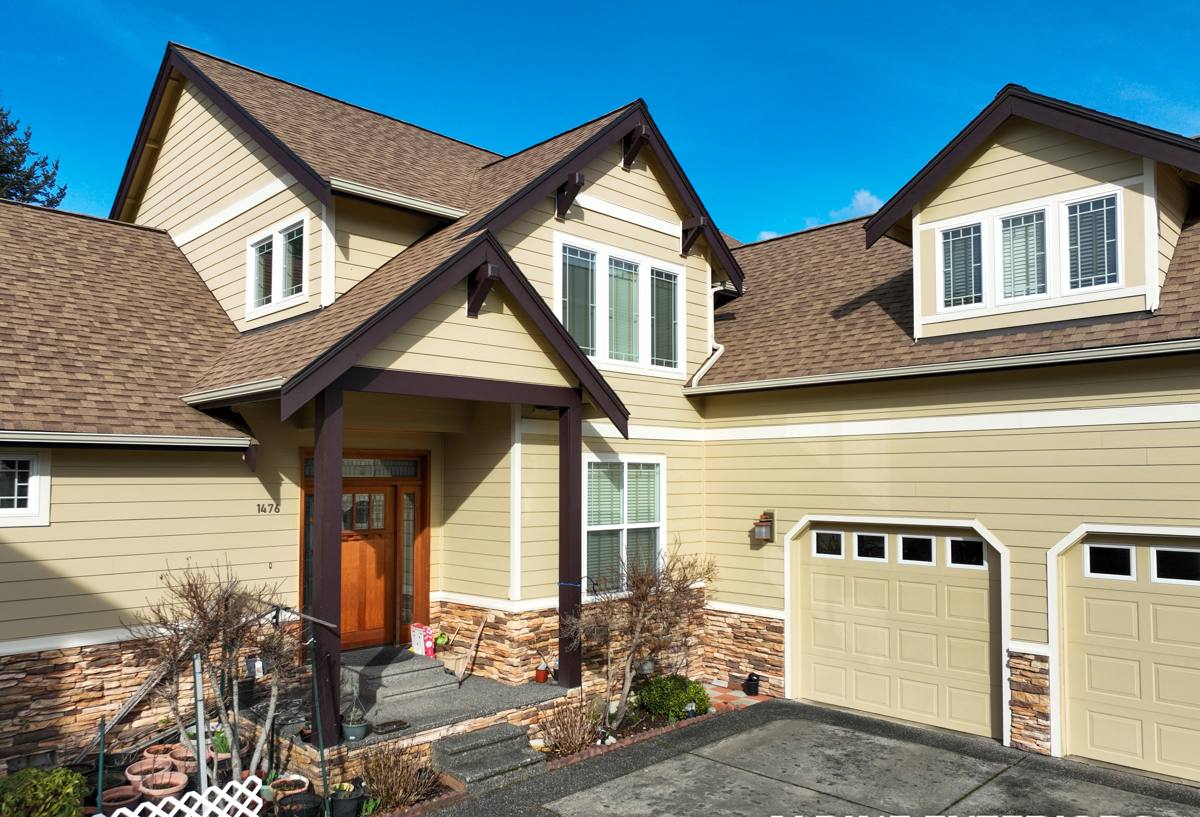
Signs a Cordata Home's Siding Has Reached the End of Its Life
Visual and Physical Clues
- Soft, spongy, or crumbling spots when you press on the siding, especially near the bottom courses and around windows
- Paint that's chalking, peeling, or bubbling in patches rather than wearing evenly
- Persistent moss or black-green streaking that comes back within weeks of cleaning
- Visible gaps at seams, corners, or trim where caulk has shrunk or failed
- Warping, cupping, or bowing boards, particularly on north- and west-facing walls
Interior Clues That Point Outward
Sometimes the first sign isn't on the exterior at all. Musty smells in an exterior-wall closet, peeling interior paint near an exterior wall, or a slow uptick in heating bills can all trace back to siding that's no longer keeping moisture out. By the time those show up, water has usually been getting behind the cladding for a while — which is why a full replacement, not a patch job, is often the honest recommendation once damage has spread past a board or two.
What a Correct Siding Replacement Actually Involves
Replacing siding is not just pulling off old boards and nailing up new ones. In a climate like ours, the parts nobody sees are what determine whether the job lasts fifteen years or fifty.
Tear-Off and Inspection
Once the old siding comes off, the sheathing underneath gets inspected for rot, soft spots, and existing water damage — problems that are invisible until the wall is opened up. Any compromised sheathing gets replaced before anything new goes on. Skipping this step is the single most common shortcut we see on jobs that fail early.
Water-Resistive Barrier and Flashing
A new weather-resistive barrier goes over the sheathing, and flashing gets installed correctly at every window, door, and penetration. In a house that takes driving rain the way Cordata homes do, flashing details matter more than the siding material itself — a perfect product installed over bad flashing will still leak.
Fastening and Clearances to Manufacturer Spec
Fiber cement siding has specific fastening patterns, nail spacing, and butt-joint treatment that manufacturers publish for a reason — deviating from spec is one of the fastest ways to void a warranty and shorten the siding's real-world life. Proper ground clearance and kick-out flashing at rooflines also keep splash-back and roof runoff from soaking the bottom courses, which is where we see the earliest failures on older homes.
Finish and Caulking
The final finish — factory-applied color, trim, and caulking at the joints that need it — gets sealed correctly the first time. Caulk failure is a slow leak, not a dramatic one, and it's usually the first thing to go on a job that was rushed.
Why We Install Only James Hardie Fiber Cement
We don't install vinyl, LP SmartSide, Cemplank, Allura, primed spruce, or cedar. That's a deliberate standard, not a lack of options. Each of those products has legitimate strengths, but none of them hold up the same way in a climate defined by salt air, sideways rain, and long stretches of shade and moisture. Vinyl can warp and its seams open up under repeated wet-dry cycling. Wood-based and engineered-wood products depend entirely on paint film and edge-sealing staying intact — and once that film fails in a wet climate, moisture gets into the substrate fast. Cedar is a beautiful, honest material, but it demands a maintenance commitment most homeowners don't want to keep up with year after year in a climate this wet.
James Hardie fiber cement is non-combustible, dimensionally stable in wet-dry cycling, and comes with a factory-applied ColorPlus finish that's baked on rather than field-painted — which removes the weakest link in most siding failures we see. Hardie also engineers specific product lines (HZ5, HZ10) for different climate zones, so the material itself is matched to the moisture and temperature swings of a region like ours rather than being a one-size-fits-all product.
| Material | Moisture/Rot Resistance | Behavior in Salt Air | Maintenance Burden |
|---|---|---|---|
| James Hardie fiber cement | Excellent — cement-based, doesn't rot | Stable; factory finish resists chalking | Low — occasional wash |
| Vinyl | Doesn't rot, but seams/panels can warp | Can become brittle over time | Low, but limited repair options |
| LP SmartSide / engineered wood | Depends entirely on intact paint/sealed edges | Paint film wears faster in salt-heavy air | Moderate — repainting cycles |
| Cedar | Good if maintained; vulnerable once finish fails | Accelerated weathering without upkeep | High — regular refinishing |
Our Process for Cordata Siding Replacement Projects
1. On-Site Estimate and Inspection
We walk the exterior, check the current siding and trim for hidden damage, and talk through what we're seeing before any number gets written down. No pressure, no upsell script — just an honest read on the condition of the house.
2. Scope and Material Selection
We help you choose the Hardie product line, profile, and color that fit the house and the exposure it gets — a shaded, moss-prone north wall and a sun-exposed south wall don't always need identical treatment.
3. Tear-Off, Sheathing Repair, and Weather Barrier
Old siding comes off, damaged sheathing gets replaced, and a new weather-resistive barrier and flashing package goes in before a single new board is hung.
4. Installation to Manufacturer Spec
Fastening, clearances, and joint treatment follow Hardie's published installation requirements — not shortcuts, because shortcuts are what void warranties and cause callbacks.
5. Final Walkthrough
We walk the finished job with you, point out anything worth knowing for upkeep, and make sure the work matches what was scoped at the estimate.
Cost Factors for Siding Replacement in Cordata
Every house is different, so we won't quote a number here that doesn't mean anything until we've seen your walls. What we can tell you is what actually moves the price up or down.
| Factor | Why It Affects Cost |
|---|---|
| Extent of hidden sheathing damage | Rot found after tear-off requires repair before new siding goes on |
| House size and wall complexity | More corners, gables, and trim detail mean more labor per square foot |
| Siding profile and finish choice | Lap width, board texture, and color program affect material cost |
| Number of stories and access | Taller walls and tight lot lines increase equipment and labor time |
| Existing flashing and window trim condition | Failing flashing or trim often needs replacing alongside the siding |
Why a Crew That Already Works in Cordata Matters
A crew that works Ferndale and the surrounding Whatcom County neighborhoods regularly has already seen how this specific mix of salt air, driving rain, and moss plays out on real houses — which walls fail first, where flashing tends to be skipped on older builds, and which details are worth the extra time. That's different from a crew working from a generic checklist written for a drier climate. It shows up in small decisions: where we add extra flashing attention, how we handle a shaded wall that never fully dries out, and which butt-joint details we won't skip even when they add time to the job.
Living With New Siding Through Whatcom County's Wet Season
Correctly installed Hardie siding is genuinely low-maintenance, but "low-maintenance" doesn't mean "no maintenance" in a climate this wet. A little attention once or twice a year keeps the siding looking and performing the way it should for decades.
- Rinse the siding with a garden hose once or twice a year to keep moss and algae from establishing, especially on shaded walls
- Keep gutters clear so overflow doesn't run down and soak the siding below
- Trim back plants and trees so foliage isn't holding moisture against the wall
- Check caulking at trim and window edges annually and touch up any that's cracked or shrunk
- Watch for kick-out flashing at roofline intersections — this is where splash damage shows up first if it's missing or undersized
None of that is difficult, but skipping it is how even good siding gets a harder life than it needs.
Get an Honest Look at Your Siding
If your Cordata home's siding is showing its age — or you just want an honest read on how much life is left in it — we're happy to take a look. The estimate is free, there's no pressure, and you'll get a straight answer about what your walls actually need.